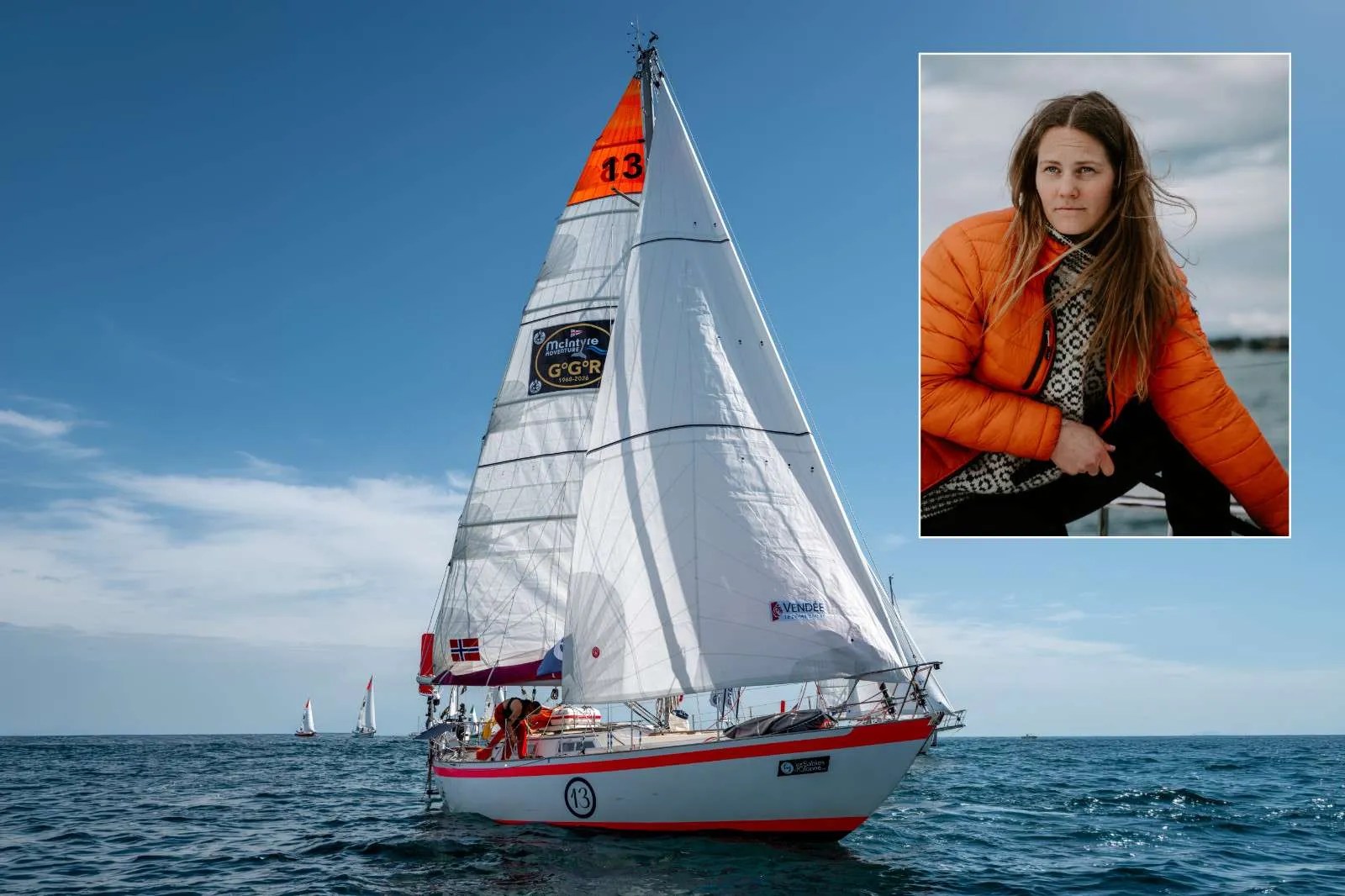
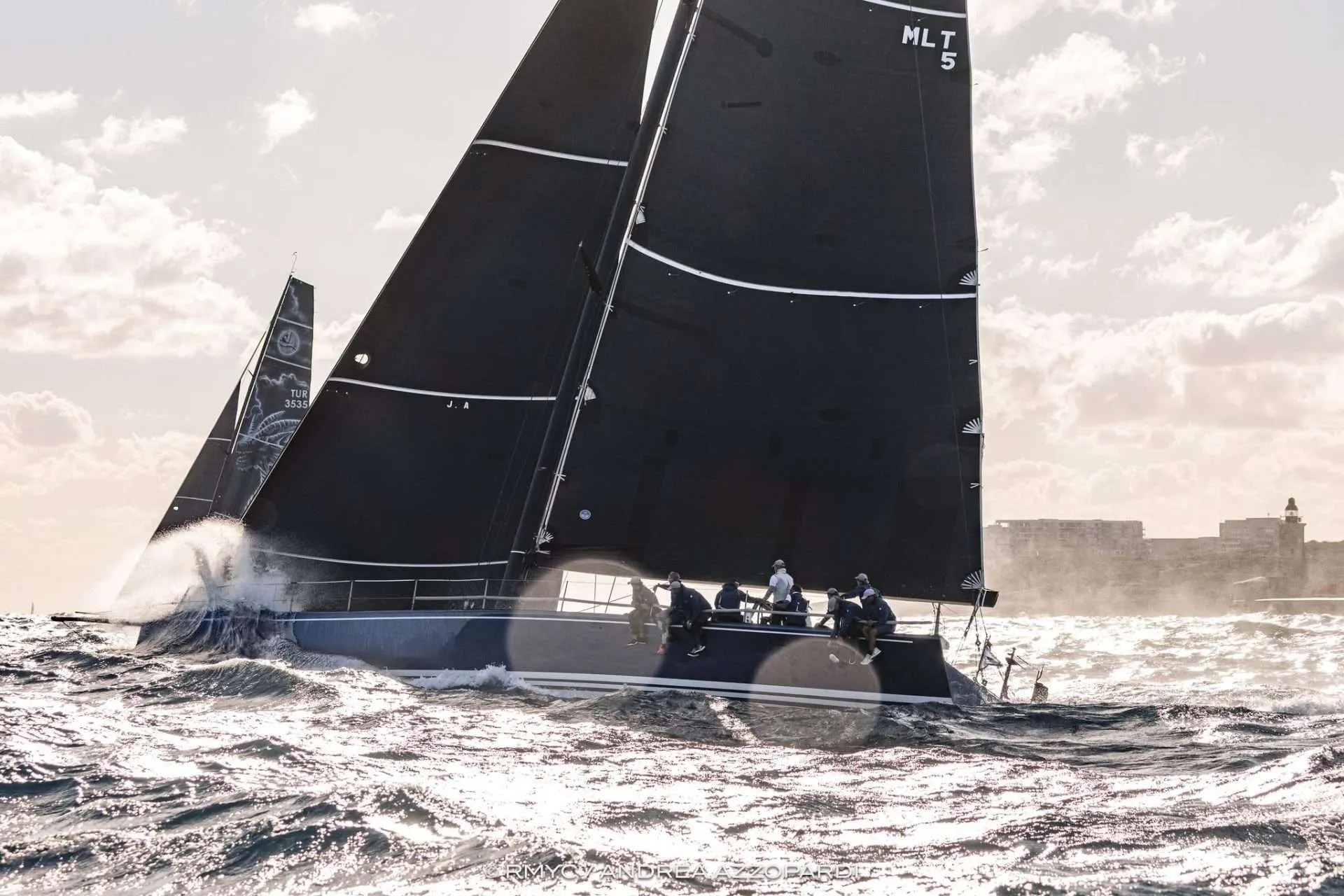
So this is where things stand. Six boats racing across the Atlantic as a warm-up for the Big Event, The Ocean Race which starts from Alicante in Spain on January 17, 2027. In my humble opinion it’s kind of a poor showing with just six entries in each race. What was once the greatest offshore ocean race, the Whitbread Around-the-World Race, has become a shadow of its former self.
I do not mean to demean the efforts of my friends Boris and Koji or indeed the other skippers; they are showing up to give it a go, some of them on a shoestring budget, but I have to ask, whatever happened to the Whitbread?
There was a time when the ultimate sailing goal for any up and coming sailor was to do a Whitbread. Unfortunately the race went the way of many good ideas. It was squashed by money, or to be more precise, lack thereof, or perhaps too much money. It’s easy to Monday morning quarterback anything. I once saw, and I don’t think that I was supposed to see what it was that I saw, but I was asked by the Whitbread PR people to write a fluff piece and they sent me all the PR numbers from the 2005/06 race.
I was a tad shocked to see that to field an entry in that Whitbread, a competitive entry with a crack skipper set the sponsor back around $30,000,000. That’s a lot of cash for an event where the boats are, as Conrad Colemen a Kiwi entry in both races puts it so well, “these boats are pushed by the wind and charged by the sun.”
Both of which are free for the taking.
It’s money that pulled the heart out of the Whitbread. In the old days, and I don’t mean to age myself (too late – ed), you could find the budget in the back pocket of a semi rich popstar (yes I am talking about you Simon Le Bon) or as things got a bit more expensive you could have a New Zealand brewery (only five million people live in New Zealand) but the great Peter Blake (later Sir Peter) managed to talk a decent amount of money out of LION, New Zealand’s largest brewing company who brew a tasty drop called Steinlager. I am certain that Blake and crew delivered over and above on that sponsorship. That race in ’89/90, was the last time that ordinary boats and ordinary people could participate in that extraordinary event.
Blake and Steinlager had upped the ante.
Then came the money in the form of title sponsorship by Volvo and in my opinion it screwed things up (a little). It was inevitable and there is no one to blame. Race organisers were doing their best to balance the cost of a campaign against the need for newer (read more expensive) technology and newer designs which meant having to build a new boat for each race. The race was evolving and in doing so the heart of the event was being ripped out and shredded.
When the first Whitbread Race was held in ‘73/74 those watching the start out of Southampton said that it was like watching soldiers going off to war. You never knew who would return, and some didn’t. There was real adventure there and people were inspired. By the time Volvo got involved it was just some professional sailors sailing very expensive, highly strung boats as fast as possible on a course that seemed to chase the money all over the world. That original four-leg course didn’t cut it anymore and the sailing and general public kind of lost interest. It was getting harder for them to relate.
I digress. The Ocean Race Atlantic starts tomorrow, September 2. It’s a feeder race for The Ocean Race which makes it a great idea. It will give the competitors a chance to size each other up and to test their boats in what could be a gruelling transatlantic crossing.
There are five main points that I like about these two races. The switch to only IMOCA 60s was a good move. The rules for the Volvo boats (and Heineken and Whitbread before them) were too restrictive. IMOCA was developed with fewer restrictions and it shows. The boats are incredible foiling machines that could set new records on the way to Lorient.
The fastest 24-hour record set by a fully crewed VO65 which is a one-design used for the last two editions of The Ocean Race was 602.51 nautical miles. That was aboard AkzoNobel. Compare that to the fastest 24-hour run set by an IMOCA 60 sailed single-handed which was 615.33 nautical miles set by Groupe Dubreuil. A smaller boat sailed solo. Stack those two numbers up against the fully crewed IMOCA Malizia – Seaexplorer that covered 641.13 nautical miles in 24 hours. The skipper was Boris Herrmann who is back with a brand new IMOCA so keep an eye out for that record getting broken.
Second point. Finally there is recognition that female sailors are equal to their male counterparts. Each boat must have two male crew and two female crew. I say that it’s about time. Enough said.
Third point. Each boat must have an onboard reporter (OBR) in addition to the four crew. Their importance cannot be overstated and the footage that can be captured by drones and transmitted back to shore in real time is exceptional. I also hope that we hear directly from the skippers and crews in their own words.
Fourth point. I love that both events have embraced the oceans and will be contributing to the science that will lead to a healthier planet. And to that point, in a nod to the wildlife usually found around the entrance to New York harbor, there will be a ceremonial start in New York and a virtual start 145 miles out in in the Atlantic.
Lastly, I like that they are starting on a Wednesday. As much as I liked the days of huge spectator fleets chasing the boats out of the harbor on a perilous voyage around the world, the recognition that the main audience is global, not just New York and I’m sure will be huge for the start and for most of the next year. It used to be that the Whitbread boats were out of sight for most of the race. Now the boats are in your living room on an almost hourly basis.
That should be a good thing, however I am still disappointed that despite the incredible coverage and the best efforts of some very talented people that there are only six boats competing. If one or two of them have some kind of issue on the first (and longest leg ever) from Alicante to Auckland, there might be just four boats and that a race does not make, in my humble opinion.- Photo Vincent Curutchet / The Ocean Race Atlantic. – Brian Hancock.