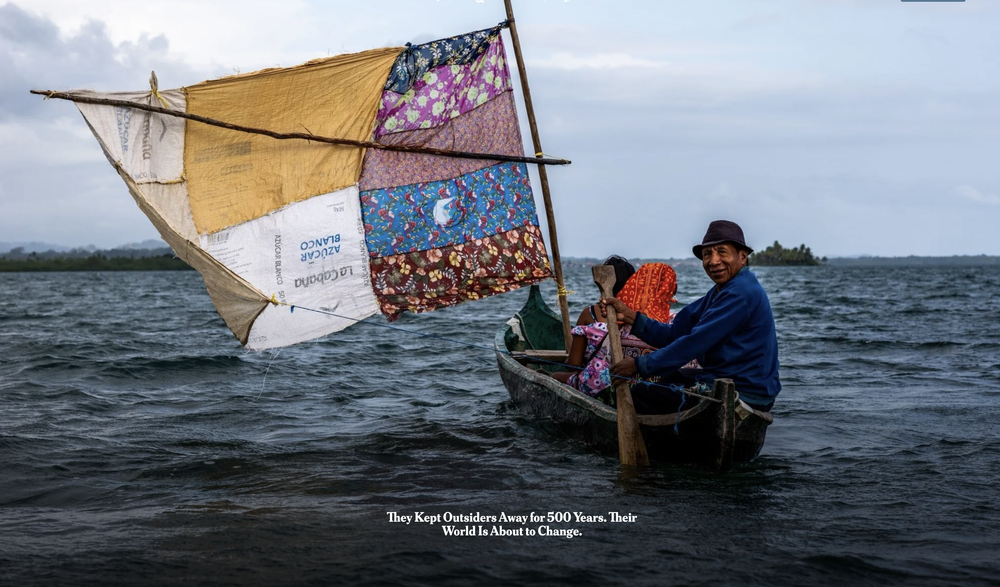
In 1970, my father, a shaggy 25-year-old from the Chicago suburbs finishing his Ph.D. in anthropology, traveled with my mother to the Gunayala region of northeast Panama to ask its inhabitants, the Guna people, for permission to study them. The Guna lived on an archipelago of sandy, palm-covered islets along the Caribbean coast and had a reputation as prickly and disagreeable.
My parents went from village to village as my father, James, introduced himself in Spanish. He was not the first anthropologist the group had seen. The Guna had a long history of interacting with wagas, as they called non-Guna. Wagas tended to be struck by Guna independence. According to a U.S. government report in 1964, the Guna’s “chief characteristic has been and continues to be a persistent determination to preserve their cultural and racial structure against pressures from the outside.”
That had been evident when, just a few years before my father arrived, an American businessman named W.D. Barton built a resort on one of Gunayala’s more than 350 uninhabited islands. The Guna burned it down. And when Barton tried to rebuild it, they burned it down again. Read on, thanks to Mark Chew.